Market Movers
4.2 135.00 Reviews
Analysis By AppCompare
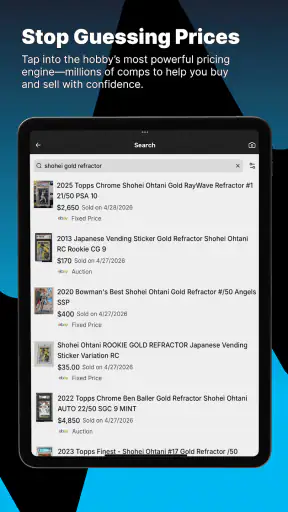
Market Movers is the kind of sports app I would open with a specific card in mind, not simply to browse for a few minutes. It is built for people who follow sports cards and trading card games closely enough to care about price movement, sales history, and whether a purchase makes sense beyond the excitement of a new release. After spending time with it, I see its main value in turning scattered market research into a repeatable routine.
The app comes from Sports Card Investor and sits in the Sports category. It is free to install, rated for Everyone, and works on devices running Android 7.0 or later. Its current version is 5.4.0, and its average rating is 4.2 from around 500 ratings. Those figures suggest a useful but fairly focused tool rather than a universal sports companion. The audience is collectors, sellers, and trading card game enthusiasts who are willing to look at evidence before making a decision.
I would not describe it as a casual news feed or a simple collection checklist. Its purpose is closer to a market research workspace. That distinction matters because the app becomes more useful when I already know what I want to investigate: a player, set, card, parallel, or recent sale pattern. If I only want scores, headlines, or a quick way to catalog cards, a conventional sports app or collection manager may feel more comfortable.
How I use Market Movers for a reliable card-checking routine
Starting with a question instead of endless browsing
My best results came from opening the app with a clear question. For example, before listing a card, I might want to know whether recent sales are clustered around one price or spread widely. Before buying, I might ask whether a recent jump looks steady enough to investigate or too inconsistent to trust. Framing the task this way keeps the app from becoming an endless scroll through interesting but irrelevant cards.
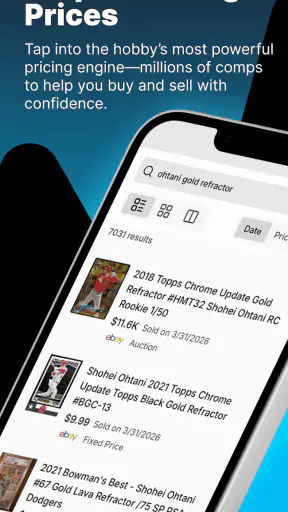
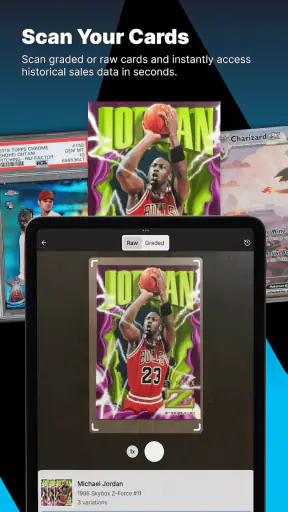
A practical first pass is to identify the exact item, then check the surrounding market context. The exact version matters enormously in collectibles. A base card, numbered parallel, autograph, graded copy, and raw copy can behave like separate products even when they share the same player and design. I found that the app is most helpful when I slow down at this identification stage instead of treating a broad search result as a final answer.
This is also where a little discipline prevents expensive mistakes. I would compare the card title, player, set, year, and any visible variation before using a price as a buying or selling reference. If the match is not precise, the number may still look convincing while describing a different item. Market Movers can organize market information, but it cannot remove the collector’s responsibility to identify the card correctly.
A realistic everyday scenario for sellers
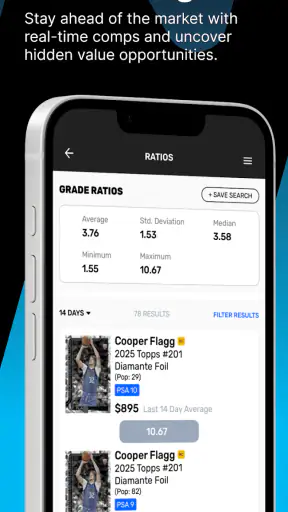
Imagine I have several cards to list after a weekend of sorting. Rather than assigning prices from memory, I can use the app to review each card in the same order: confirm the version, inspect the recent market behavior, note whether comparable sales are consistent, and then decide how aggressively to price it. That process is more valuable than checking one impressive sale and copying it.
For a seller, the important habit is separating a reference price from a guaranteed outcome. A card may have a recent sale that attracts attention, yet condition, grading, timing, shipping, and buyer confidence can all change the result. I use the app to establish a sensible range and a direction, not to promise that my copy will sell at a particular figure.
This workflow is especially helpful when I am dealing with a collection that contains both familiar names and less obvious items. Memory tends to favor stars and recent hype. A market-focused tool gives me a reason to inspect the quieter cards too, where I might otherwise underprice something or waste time listing an item with little demand.
What collectors should record mentally
Market Movers is not a substitute for a collecting plan. I still need to decide whether I am collecting a player, building a set, holding cards for a longer period, or simply selling duplicates. The same market movement can mean different things depending on that goal. A short-term seller may care about liquidity and recent activity, while a personal collector may accept a higher price because the card completes a meaningful part of a collection.
I also pay attention to the difference between activity and quality. A card that appears often in market discussions is not automatically a better purchase. In my experience, the app works best when it prompts a second question: what makes this card desirable, and is that reason durable enough for my plan? That question protects against treating every upward movement as an invitation to buy.
Settings and presentation choices worth checking
The first settings I would review are the ones that affect how I search and interpret information. If the app offers choices for display, sorting, notifications, or account preferences on my device, I would configure them around my actual routine rather than leaving everything at its default. A collector who checks markets once a week needs a different rhythm from a seller preparing listings every evening.
I would also make sure the device is comfortable for comparison work. Market research becomes tiring when I rush through small text or repeatedly lose my place. A larger screen can make it easier to compare names and versions, while a phone is convenient for checking a card during a trade or at a show. The app’s value is not only in what it displays; it is also in whether I can use that information without making identification errors.
Notifications deserve restraint. Alerts can be useful when they support a defined watch habit, but too many prompts can turn normal price movement into noise. I prefer to use alerts, where available within my setup, for cards I would genuinely act on. Otherwise, I check on a schedule and avoid making decisions simply because the phone interrupted me.
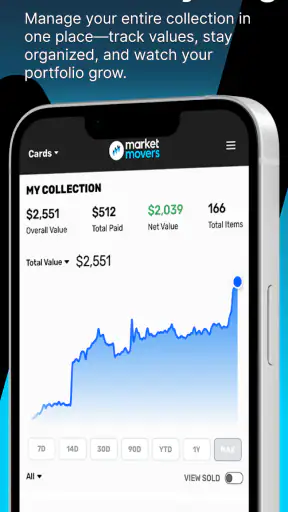
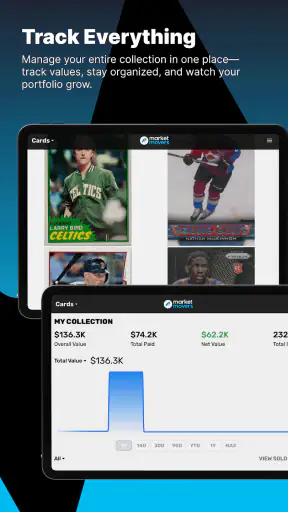
Another worthwhile setting is the way I organize searches or favorites, if those tools are available in the version I am using. I would keep the list narrow and purposeful: cards I own, cards I may buy, and cards I am actively monitoring should not become one indistinguishable pile. A smaller watchlist makes changes easier to notice and reduces the temptation to chase every popular name.
Faster patterns that save time without lowering accuracy
The fastest reliable pattern I found is a two-pass review. In the first pass, I eliminate obvious mismatches by checking the exact card identity. In the second, I study the market behavior and decide what action, if any, follows. This is quicker than deeply analyzing every result and then discovering that I was looking at the wrong parallel.
I also like using a fixed order for repeated tasks. For buying, my sequence is identification, recent sales, consistency, personal budget, and exit plan. For selling, it is identification, comparable sales, condition, listing price, and patience. Repeating the same sequence reduces emotional decisions, especially when a familiar player or attractive design makes a card feel more valuable than the evidence supports.
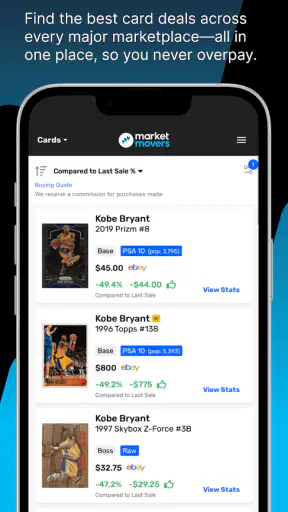
Another useful shortcut is to compare like with like before comparing prices across different cards. A raw copy should not casually be measured against a graded one, and a scarce parallel should not be treated as a base card simply because the artwork is similar. This sounds obvious, but it is exactly the kind of mistake that happens when I am browsing quickly.
I would also separate research sessions by purpose. One session can be for deciding what to buy, another for pricing cards already owned, and another for reviewing longer-term interests. Mixing all three encourages me to justify a purchase with seller logic or to price a personal favorite as if sentiment were part of the market. A repeatable routine makes the app more useful than occasional, unstructured checking.
Where the free entry point stops being the whole story
The app is free to download, which makes it easy to test without committing money immediately. However, in-app purchases range from $9.99 to $499.99 per item. That is a significant difference in commitment, so I would not upgrade simply because I enjoy browsing. I would first decide whether the app is saving me enough research time or improving enough buying and selling decisions to justify the expense.
This pricing structure also changes who should use it. A serious seller, dealer, or active investor may value deeper access more than someone who buys a few cards each year. For a casual collector, the free experience may be enough to understand the app’s approach, while the paid options could be difficult to justify unless they support a consistent hobby budget and workflow.
I would treat any paid access as a tool expense, not as part of the card budget. That separation is important. Paying for better market research does not guarantee better returns, and it should never become a reason to buy more cards than planned. The app can improve the quality of a decision, but it cannot control player performance, collector taste, supply, condition, or the timing of a sale.
Advanced limits that experienced users should keep in mind
The biggest limitation is that market information can create a false sense of precision. A displayed result may look exact, but the real-world value of a collectible depends on details that are easy to miss: surface quality, centering, corners, authenticity, grading status, and the trust attached to a seller. I would use the app to narrow uncertainty, never to pretend that uncertainty has disappeared.
Another limit is emotional timing. When a player has a major performance or a card becomes a talking point, it is tempting to treat recent movement as proof of a lasting trend. I prefer to pause and ask whether I am responding to a durable collecting thesis or simply arriving after everyone else has noticed the same story. Market Movers helps me inspect movement, but my judgment still has to interpret why it happened.
It is also not the right choice for every sports fan. If my priority is live scores, fixtures, team news, or fantasy lineups, this app is too specialized. If I need a polished inventory system for insurance or household organization, a dedicated collection app may be better. And if I am uncomfortable making decisions around fluctuating collectible prices, a simple checklist may be healthier than a market dashboard.
Trading card game users should apply the same caution. A card’s playability, rotation environment, rarity, condition, and community demand can all matter, and a market view is only one part of that picture. I would combine the app with current game knowledge and actual card inspection rather than assuming that a price chart alone explains the card’s future.
Who gets the most from the app
I think Market Movers is strongest for collectors who want a repeatable research habit. It suits someone who regularly buys, sells, trades, or follows several card categories and wants a more grounded starting point than memory or social media excitement. The developer’s focus on sports cards and trading card enthusiasts is reflected in that specialized feel.
It is also useful for a collector who is learning how to think in comparisons. Instead of asking only whether a card is expensive, I can ask how it behaves relative to similar cards, whether sales appear consistent, and whether the current price fits my purpose. Those are better questions than simply searching for the highest recent result.
I would recommend trying it to a friend who has already begun making repeated card decisions and feels that casual browsing is no longer enough. I would not recommend paying for advanced access to someone who has not yet established what they collect, how much they can spend, or how often they will actually review the market.
My verdict after building a repeatable habit
Market Movers earns its place as a focused sports card and trading card game research app because it encourages decisions based on market context rather than impulse. I found the experience most valuable when I used a fixed workflow, checked card identity carefully, and treated every price as evidence rather than a promise.
Its free availability makes the first step easy, while the broad range of optional in-app purchase prices means experienced users should evaluate the cost against their real activity. The app is not a crystal ball, a replacement for card inspection, or a general sports utility. It is a research companion, and its usefulness depends on how thoughtfully I use it.
For a casual fan, it may feel more detailed than necessary. For an active collector or seller, that detail can become a practical advantage, especially when repeated habits turn scattered checking into a consistent process. The best reason to use Market Movers is not to chase movement, but to make fewer careless decisions when movement catches your attention.
With over 100K installs, it has clearly found an audience among people interested in this specialized corner of collecting. I would approach it as a tool for informed comparison: start free, develop a clear routine, verify the exact card, and only consider paid features once the app is genuinely part of the way I buy or sell.
FAQ
What is Market Movers, and who is it designed for?
Market Movers is a market research and analysis app designed primarily for sports bettors, fantasy players, and users who want to track changes in betting markets. It brings together information such as line movement, odds history, market trends, and related data in one place. The app is most useful for people who already understand basic betting terminology and want additional information before making decisions.
What features does Market Movers offer?
Market Movers typically focuses on identifying meaningful changes in betting markets and helping users compare current information with earlier market conditions. Depending on the platform and subscription level, users may find odds movement, market filters, alerts, historical data, team or player information, and customizable views. These tools can make research faster, but they should be treated as decision-support features rather than guarantees of successful bets.
Is Market Movers free to download and use?
Market Movers may be available to download without an upfront charge, but some of its more advanced research tools can require a subscription, account, or in-app purchase. Before downloading, it is worth checking the current pricing, trial conditions, renewal terms, and which features are included in the free version. Subscription availability and costs can also vary between Android and iOS.
Can Market Movers guarantee winning betting or fantasy results?
No. Market Movers provides data, trends, and analytical tools, but it cannot predict outcomes with certainty or guarantee profits. Sports events remain unpredictable, and market information can change quickly. The app should be used as one part of a broader research process. Users should set a budget, avoid chasing losses, and follow local laws and responsible gambling guidelines when using information for wagering.
What should I check before downloading Market Movers?
Before installing Market Movers, check whether the app is officially available in your country and supports your Android or iOS version. Review its privacy policy, account requirements, subscription details, notification permissions, and recent user feedback. You should also confirm that the sports, leagues, bookmakers, or fantasy platforms you follow are covered, since the app’s usefulness depends heavily on the markets and data sources available in your region.
Pros
- Real-time market data helps users react quickly to price changes.
- Custom watchlists make it easy to track selected stocks and assets.
- Clear charts support quick analysis without requiring advanced knowledge.
- Price alerts can help users monitor important market movements remotely.
- Useful for comparing performance across different markets and securities.
Cons
- Some advanced tools may require a paid subscription or in-app purchase.
- Market data may be delayed depending on the asset or account type.
- Frequent alerts can become distracting during volatile trading periods.
- The app may feel overwhelming for beginners unfamiliar with market terms.
- Investment information does not guarantee profits or replace professional advice.